If you are viewing this on your phone and do not see 3 columns then scroll left/right or switch to webpage or computer view.

Showing posts with label Revolutionary War of Independence. Show all posts

Thursday, September 13, 2018

Colonel John Luttrell: Battle Of Lindley's Mill

excerpted from “Military Roll Call: The Littrell Familyof Mississippi County, Missouri” Chapter 1. The Revolution.
reposted from 10-20-2015
N Carolina (5) John is not a direct ancestor of ours, but he was a first cousin of once removed of Robert Luttrell and therefore the 2nd cousin (thrice removed) of our John Daniel Littrell).N Carolina (7) small


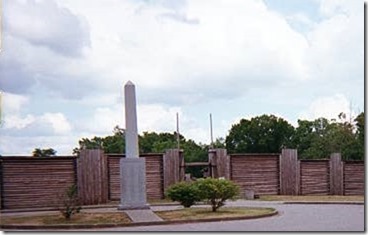
As mentioned in a previous article I was unable to locate the actual Battle Field that Col. John Luttrell had died on, but had found the current location of Lindley Mills and one marker referencing the battle.
I have located the actual location online and the following is from that website:
"On September 13, 1781, the largest engagement of North Carolina’s “Tory War” took place near Thomas Lindley’s mill. In the aftermath of Lord Charles Cornwallis’s invasion of North Carolina in the spring of 1781, a prolonged civil conflict erupted in the Piedmont. With no regular forces actively campaigning in the area, Whig and Loyalist militias openly attacked each other as well as neutral parties. Loyalist Colonel David Fanning, leader of the Loyalist militia in central North Carolina, had received approval from British authorities in Wilmington to attack the state capital at Hillsborough. Fanning led 435 Loyalists from central and western North Carolina. He had been reinforced by two small bands of Tories from Cumberland and Bladen counties led by Colonels Archibald McDougald and Hector McNeil, raising his overall force to nearly 700 men. Battle of Lindley's Mill
      At dawn on September 12, 1781, under the cover of a heavy fog, Fanning’s men brazenly entered Hillsborough, taking the town by surprise and capturing 200 prisoners, including most of the General Assembly and Governor
Thomas Burke. Having thoroughly plundered the village, Fanning and his men, their prisoners in tow, departed for Wilmington in the afternoon.
      Word of the disaster reached Brigadier General John Butler of the North Carolina militia that evening. Butler, who had led North Carolina militia at
Guilford Courthouse, quickly organized men from Orange County to intercept the Tory force. Accounts differ on how many men Butler raised, but a 350-man force is the best estimate. His second-in-command was Colonel Robert Mebane, a Continental army veteran. Another Continental army veteran, Captain Joshua Hadley, arrived that evening with a small company of Whigs from Cross Creek, augmenting Butler’s force to nearly 400 men. Battle of Lindley's Mill
      Butler’s men arrived ahead of Fanning at Lindley’s Mill, near a ford across Cane Creek on a plateau overlooking Stafford’s Branch. On the morning of September 13, as the Loyalists crossed, a musket volley from the tree line on the opposite bank tore into their ranks. At first the Loyalists balked, and Colonel McNeil ordered a retreat, but was rebuked by Colonel McDougald who accused him of cowardice. McNeil, infuriated by the remark, instead led a charge toward the Whig position but was immediately cut down by rifle fire and killed.
      Hearing the gunfire at the head of the column, Fanning rode to the front, ordering the prisoners to be housed in the
Spring Friends Meeting House in the rear. Although outnumbered, Whigs pressed the head of the Tory column back toward the chapel, apparently intent on freeing Burke and the other captives. Fanning then organized an assault that flanked Butler’s men, threatening to surround his forces. Just as he began driving Butler’s men from the field, Fanning received a serious wound in his arm that shattered the bone and severed an artery. He left the column in McDougald’s command and retired from the field. Pressed on both front and flank, Butler retreated, and Fanning’s column continued on to Wilmington with the prisoners.
      That night, local Quakers collected the dead and wounded on the field. Whig casualties consisted of 25 killed, 90 wounded and 10 captured, while the Tories lost 27 killed and 90 wounded. Surgeons from the surrounding countryside were called upon to help administer to the wounded. Among them was Dr. John Pyle, who earlier that year had led his Loyalist militia regiment into an ambush at
Pyle’s Defeat. Putting aside his earlier allegiances, Pyle worked tirelessly for the injured of both sides. In return, Governor Alexander Martin pardoned him at war’s end."
To place the above information in Context to Col. Luttrell the Reverend Caruthers describes the death of Colonel John Littrell and the battle:
"Several of the highest officers on both sides were killed and nearly an equal number of each. These were men of much merit as officers, and their death was a great loss to their respective parties. On the Whig [American] side Major John Nalls and Colonel Lutteral were among the slain...."
"...Colonel Lutteral was also killed about the close of the battle and was a great loss to the country. He is said to have been a brave and valuable officer; but his men thought him too severe in his discipline… Having advanced at the head of his men within pistol shot of a Tory from Randolph, by the name of Rains, who was in the act of loading his rifle, and fired at him with his pistol but without effect. He then wheeled his horse and dashed off, to get out of reach before the other would be ready to fire; but Rains, having finished in time, leveled his gun at him, when at full speed, and shot him through the body. He did not fall but rode to a house about half a mile distant, where the good people took him upstairs and furnished him with a bed and every comfort in their power. While lying there bleeding and dying, he dipped his finger in his own blood and wrote his name upon the wall. The house stood there as a Monument of the Cane Creek Battle and of Colonel Lutteral's death until about seven or eight years ago; and the Colonel's name retained its color and brilliance until the last. There were two men belonging to Fanning's troop by the name of John Rains, father and son, and McBride says that John Rains, SR., was killed at the battle of Cane creek…"
sources:
  • LITTRELL and LUTTRELL HEROES In the WAR for American Independence [All Spellings]: By KARL DEWITT LITTRELL [decsd] with NANCY LITTRELL GOLDSBERRY
  • Patrick O’Kelley, Nothing But Blood and Slaughter (2004), III
  • Algie I. Newlin, The Battle of Lindley’s Mill (1975)
  • William S. Powell, ed., Encyclopedia of North Carolina (2006)
  • Eli Caruthers, Revolutionary Incidents and Sketches of Character, Chiefly in North Carolina (1854)
  • http://www.ncmarkers.com/Results.aspx?ct=ddl&k=Keywords&sv1=Keywords&sv2=Revolution

The above information is from: Military Role Call: The Littrell Family of Mississippi County, Missouri, The Littrell Family Journals Volume IV. (click here)
also: 
Littrell Family Veterans Video

999/1311

Monday, October 30, 2017

Rennie Belew and sons in the 2nd Spartan Regiment: A family at war.

Rennie Belue (also spelled Reney, Renny, Renney, etc.,
and Blue, Belue, Belieu, Ballow, etc.) was
Kizzie Comer
Littrell’s great-great-grandfather.

Rennie Belue, was a Lieutenant in the Spartan Regiment and later the 2nd Spartan Regiment.

The county of Spartanburg, South Carolina has more Revolutionary War engagement sites than practically any other locale in the United States. Thus the early formation of the Spartan Regiment, made up of fiercely independent upstate settlers, in the late summer of 1775.

"...The BELUE (or BELEW) family supported the cause of the patriots during the American Revolution, both by serving in the military and by furnishing supplies to the American troops... Renney BELUE, Sr, as well as his three oldest sons, fought for the Americans. "Reney BELIEU" served as a lieutenant under Col. John THOMAS in 1776. He must have faced…”

2nd spartan reg
As you can see from the map, the battles fought by the 2nd Spartan Regiment during the service of Rennie Belew and his sons are too numerous to present here. Seventeen of the mapped engagements are described in: “Military Role Call: The Littrell Family of Mississippi County, Missouri”

Private. Zachariah Belew (Belue)Second Creek Cemetery
Kizzie's great-grandfather, Zachariah Belew (Belue), was a Pvt., in Col. Brandon’s Regiment of the South Carolina Militia.30 He received several wounds while serving in the Revolutionary War.

1779: Rennie and Zachariah Belue in the 2nd Spartan Regiment.
Rennie Belue (Belieu) would also serve in Brandon's regiment, the 2nd Spartan Regiment. Records indicate that this period was 1979-1981 (inclusive). Col. Thomas Brandon was a captain in the 1776 Spartan Regiment. Brandon was a neighbor of Rennie's after the war and possibly before.
Rennie's son, Zachariah Belew, also served in the militia joining his father under Col. Brandon and it is our assumption that it was during this same period of enlistment, 1779-1781.

1781: Rennie Belue and his three sons in the 2nd Spartan Regiment. Renney Belew (Jr.) and Rueben would join their father and oldest brother in 1781.

  • Following the war Rennie Belew would prosper in Union County, South Carolina., were he would pass away in December of 1797.
  • Zachariah, with some of his children, nephew and nieces, and their families would migrate to Lawrence Co., Tennessee about 1827. With Zachariah was his widowed daughter Susannah Belew Comer and her son Jesse Comer. County legend says the young Jesse would make the entire trip from Union County, South Carolina to Pebble Hill, near Loretto (in Laurence County, Tn.) riding horseback behind his mother, Susannah.
  • Renney Belew (Jr.) would die young in Union County, South Carolina. Some of his and Keziah (his widow) children may have migrated with Zachariah as they show-up in Lauderdale County, Alabama within miles of the state line and border with Lawrence Co., Tennessee.
  • Ruebin Belew would remain in Union County, South Carolina and pass about 1806.

excerpted from:

“Military Roll Call: The Littrell Family
of Mississippi County, Missouri”
Chapter 1.
The Revolution. (click here)
also: 
Littrell Family Veterans Video

reposted from 2016:   115 / 289

Sunday, October 29, 2017

Thomas Luttrell: Ft. Boonesborough, Ky.

Pioneer, Indian Fighter, Boonesborough Militia.

Ft Boonesborough (15)

Thomas is not a direct ancestor of ours, but he was a first cousin of once removed of Robert Luttrell and therefore the 2nd cousin (thrice removed) of our John Daniel Littrell).
Thomas is the half brother of Col. John Luttrell, we don't know if Thomas, arrived with his brother John and Judge Henderson, or set out with the Boone party. We don't find mention of him in Henderson's diary along with the many times his brother John was mentioned, so we assume that he was with the Boone (Wilderness) Party. We have little information on Thomas other than land claims and probate papers for him1 and his brother John (and later John's widow and her nefarious second husband). We believe he remained at Ft. Boonesborough after his brother returned to North Carolina.Ft Boonesborough (17)crppd

Thomas does not appear to have established himself as well as the Colonel so his holdings at Ft. Boonesborough maintained his attention to a greater degree than John, who had affairs and estates in North Carolina, as well as a pregnant wife there.
We believe that Thomas Luttrell died in Kentucky and may have left descendants there.

After the Colonel's departure the history of the fort is filled with conflicts and events that we can only speculate that Thomas Luttrell may have been witness to. We do know that he did meet his settlement requirements for a land claim by '...raising a field of corn” during the first year of Fort Boonseborough's existence. He may have been dead by the end of the war. Failing to find any record of Thomas ever leaving Kentucky and the indications that he was alive at or near the end of the revolution we can then summarize that he was probably involved in at least one of three major events at Fort Boonesborough during the revolution:

  1. Capture of Daniel Boone: With the food supply at Boonesborough running low, Daniel Boone led a party of thirty men to the salt springs on the Licking River. Boone's party was greatly outnumbered and captured by Chief Blackfish. Boone and his men were taken as prisoners to Blackfish's town of Chillicothe. Per Shawnee custom, Boone and some of the prisoners were adopted into the tribe to replace fallen warriors. The remainder were taken to Detroit, where Indians received a bounty for each prisoner (or scalp) taken. Boone eventually escaped. Boone eluded his captors and raced home, covering the 160 miles (260 km) to Boonesborough in five days. If Thomas was in the original Daniel Boone party that was captured then he probably spent the rest of the war in captivity in Detroit.
  2. The Raid on Paint Lick Town: Upon his return, Boone lead a preemptive raid against the Shawnee village of Paint Lick Town on the other side of the Ohio River. This accomplished little.
  3. The Siege of Fort Boonseborough: On September 7, 1778, Blackfish's force arrived outside Boonesborough. Boone counted 444 Native Americans and 12 white men. The former were mostly Shawnees, with a number of Cherokees, Wyandots, Miami’s, Delawares, and Mingos. The latter were French-Canadian militiamen from Detroit, now fighting on behalf of the British Crown. Although this was the largest force yet sent against the Kentucky settlements, taking a fortified position like Boonesborough would still be difficult without artillery to reduce the stronghold. After days of negotiations Blackfish demanded to know "by what right had the white people taken possession of this country." Boone replied that they had bought the land from the Cherokees at Sycamore Shoals (The Treaty of Watuaga). A Cherokee chief confirmed that this was true. Blackfish accepted this answer.What happened next is unclear, but a scuffle broke out, and marksmen from both sides opened fire. All but one of the Americans managed to scramble back into the fort-the last one had to take cover next to a tree stump by the main gate. Negotiations were over; the formal siege had begun. Gunfire was exchanged over the next several days. The Shawnees launched their final assault on September 17, again trying to set fire to the fort. They were beaten back, and a heavy rain helped to put out the fires. The Shawnees lost more men killed in this attack than on all previous days. The next day, they gradually broke off the siege.

1we know his heir was another John Luttrell (probably Thomas's own son) who inherited as much as 1400 acres of land.

see also


The above information is from: Military Role Call: The Littrell Family of Mississippi County, Missouri, The Littrell Family Journals Volume IV. (click here)
also: 
Littrell Family Veterans Video

reposted from 10-18-2015:   35 

Wednesday, October 25, 2017

Richard Luttrell, Jr.:Virginia Militia

Richard is not a direct ancestor of ours. He is the brother of
Grandpa John’s
great-great-grandfather, Robert Luttrell.

Pvt. Luttrell served under Major George Rogers Clark in the successful campaign northwest of the Ohio in 1778-79 (The old Northwest Territory) during the American Revolution. His service earned him two land grants following the war.

In July 1778, Col. Clark's militia including Richard Luttrell and about 175 men crossed the Ohio River at Fort Massac and marched to Kaskaskia, taking it on the night of July 4. Cahokia, Vincennes, and several other villages and forts in British territory were subsequently captured without firing a shot, because most of the French-speaking and American Indian inhabitants were unwilling to take up arms on behalf of the British. To counter the militia advance, Henry Hamilton reoccupied Vincennes with a small force. In February 1779, Clark's militia returned to Vincennes in a surprise winter expedition and retook the town, capturing Hamilton in the process.

In 1980 Richard would be appointed Ensign in the Fauquier Militia by Thomas Jefferson.image

The above information is from: Military Role Call: The Littrell Family of Mississippi County, Missouri, The Littrell Family Journals Volume IV. (click here)
also: 
Littrell Family Veterans Video

reposted from 2016: 41

Thursday, November 3, 2016

Other Family Members In The Revolution:

Besides our direct ancestors, there are several distant cousins and uncles who served in the Revolution:

  • Richard Luttrell, Jr.:Virginia Militia

Richard is not a direct ancestor of ours. He is the brother of
Grandpa John’s great-great-grandfather, Robert Luttrell.

Pvt. Luttrell served under Major George Rogers Clark in the successful campaign northwest of the Ohio in 1778-79 (The old Northwest Territory) during the American Revolution. His service earned him two land grants following the war...        read more

  • Thomas Luttrell: Ft. Boonesborough, Ky.

Pioneer, Indian Fighter, Boonesborough Militia.

Ft Boonesborough (17)crppd

Thomas is not a direct ancestor of ours, but he was a first cousin of once removed of Robert Luttrell and therefore the 2nd cousin (thrice removed) of our John Daniel Littrell).
Thomas is the half brother of
Col. John Luttrell, we don't know if Thomas, arrived with his brother John and Judge Henderson, or set out with the [Daniel] Boone party…  …we assume that he was with the Boone (Wilderness) Party. We have little information on Thomas other than land claims and probate papers for him1 and his brother John (and later John's widow and her nefarious second husband). We believe he remained at Ft. Boonesborough after his brother returned to North Carolina…           read more 

  • Colonel John Luttrell: Battle Of Lindley's Mill

John is not a direct ancestor of ours, but he was a
first cousin of once removed of Robert Luttrell
and therefore the 2nd cousin (thrice removed)
of our John Daniel Littrell).

[G-21a[3].jpg]

…the Reverend Caruthers describes the death of Colonel John Littrell and the battle:

"Several of the highest officers on both sides were killed and nearly an equal number of each. These were men of much merit as officers, and their death was a great loss to their respective parties. On the Whig [American] side Major John Nalls and Colonel Lutteral were among the slain...."                read more

see also

dedic

excerpted from:

“Military Roll Call: The Littrell Family
of Mississippi County, Missouri”
Chapter 1.
The Revolution. (click here)
also: 
Littrell Family Veterans Video

and

"Walking Among The Stones: The Littrell Family of
Lawrence County, Tennessee & Mississippi County, Missouri

Chapter 2. The Lost Littrell Cemetery.

see also

END OF PAGE

Remember, each page has a limit on how many articles can appear on that page. When you reach the bottom of a page use the “Older Post” link under the last article(ABOVE) to view/see if there are more articles.

You can use the “Newer Post” and “Older Post” links to navigate back and forth between pages.